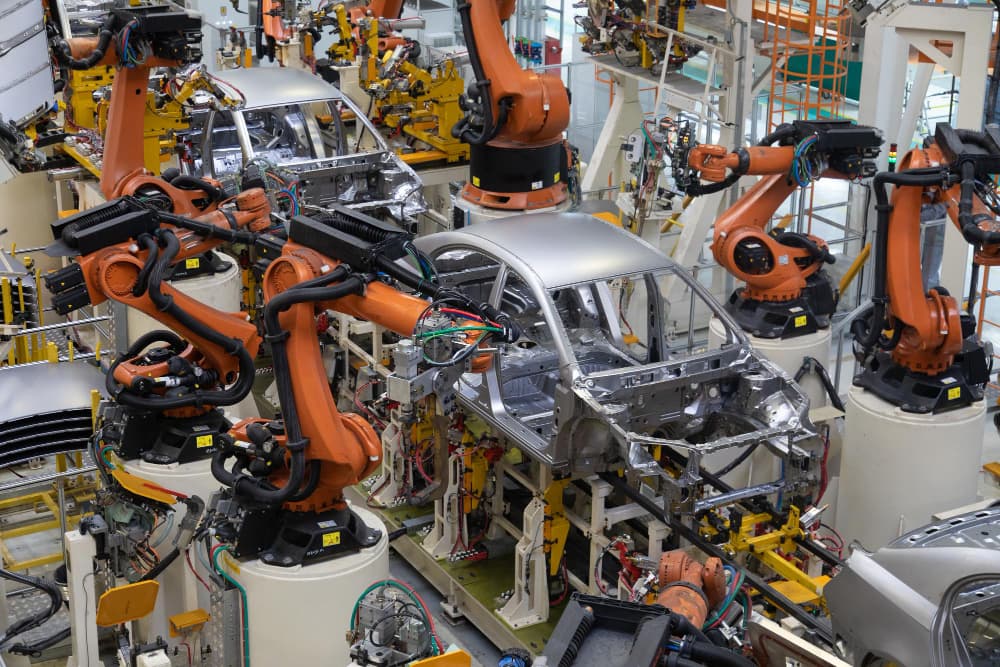

Stop thinking that million-dollar robotic arms are reserved exclusively for manufacturing giants in Silicon Valley or Germany; the reality is that automation technology is currently democratizing factory floors in Batam at an unprecedented pace. For decades, the prevailing narrative in Batam's industrial zones was that automation was merely a "toy" for multi-national corporations (MNCs) with nearly unlimited capital expenditure (CAPEX) budgets. However, the global economic landscape and advancements in sensor and microprocessor technology have radically changed the rules of the game. Today, local business owners in Batam Centre or operational managers in Tanjung Uncang are beginning to realize that investing in automated systems is no longer a luxury option, but a survival strategy amidst increasingly fierce competition.
The Myth of High Costs: Shifting from Monolithic Systems to Modular Architecture
The greatest fear for mid-sized companies in Batam when hearing the phrase "industrial automation" is the fantastic initial cost. However, data from a McKinsey & Company report shows that the cost of automation hardware has dropped by an average of 40% in the last ten years, while its technical capabilities have doubled. Previously, if a factory wanted to automate its production line, they had to purchase large, rigid monolithic systems that were difficult to modify. If one part broke, the entire system could be paralyzed.
Now, the era of modularity has arrived. By utilizing standards such as IEC 61131-3 for PLC (Programmable Logic Controller) programming, companies can start on a small scale. For example, a metal fabrication workshop in Batam can start with a single automatic control panel unit for a painting process, before later integrating into a wider SCADA (Supervisory Control and Data Acquisition) system. Through the right Industrial Automation solutions, investments can be made in stages (phasing), so that the company's cash flow remains maintained while efficiency increases bit by bit.
Imagine a scenario where an SME manufacturer in Muka Kuning faces constraints in packaging accuracy. Instead of replacing the entire production line, they only need to integrate vision sensors and a simple PLC connected to the existing conveyor. A practical insight for you: do not see automation as a massive one-off project, see it as a continuous journey where every step provides a measurable ROI (Return on Investment) in months, not decades.
Labor Pressures and Skilled Labor Scarcity in Batam's Industry
One of the main drivers why mid-sized companies in Riau Islands must immediately look at automation is labor dynamics. The consistent annual increase in the Batam Minimum Wage (UMK) puts significant pressure on the profit margins of mid-sized firms. According to BPS data, the manufacturing sector remains the backbone of Batam's economy, yet HR-related operational costs continue to rise. This is where automation plays a role not to replace humans, but to increase output per capita.
Oftentimes, factory managers in Batam complain about the difficulty of finding operators with consistent precision over an 8-hour shift. Human error in inventory recording or quality control can be fatal for contracts with international clients. By implementing an automated Inventory Management solution, the risk of stock loss or miscalculation can be suppressed to below 1%. This is crucial for companies involved in precision parts or electronic components, which are hallmarks of Batam's industry.
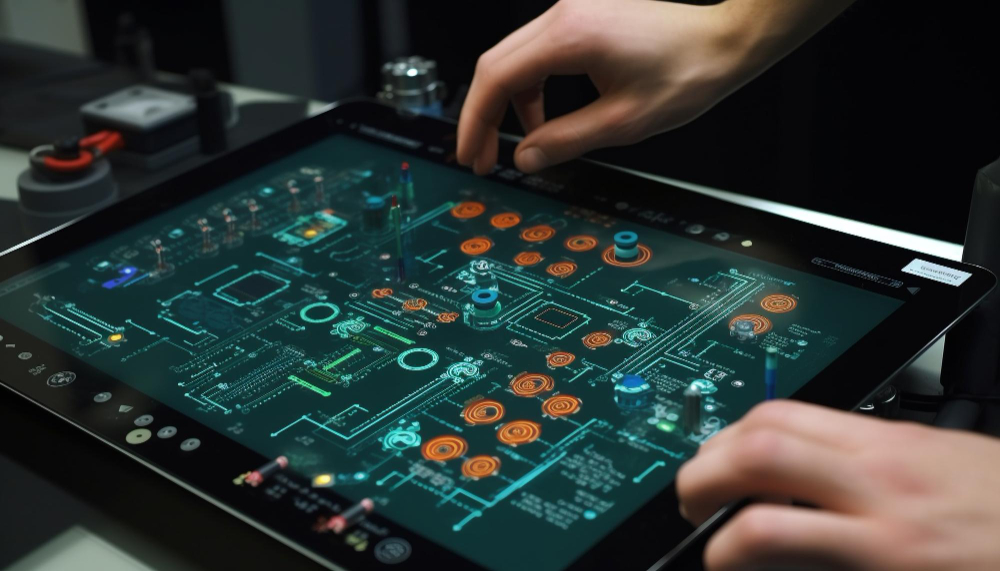
Modern HMI (Human Machine Interface) technology is now designed with intuitive interfaces, allowing operators with minimal training to supervise complex machinery. This solves the skill gap problem often experienced by mid-sized companies that may lose out to MNCs in competing for top engineering talent. This strategy allows your existing team to focus on tasks requiring creative problem-solving, while repetitive and dangerous tasks are handed over to machines.
Technology Accessibility: From Cheap PLCs to Affordable IIoT
Why is now the right time? The answer lies in component availability. Currently, global brands like Schneider Electric, Siemens, or Omron provide "entry-level" product lines that are highly reliable yet competitively priced for the Southeast Asian market. System integration is also becoming easier with open communication protocols such as Modbus TCP/IP or OPC-UA, which allow devices from different vendors to "communicate" without barriers (interoperability).
At PT Wahari Nawa Manunggal, we often find that many mid-sized companies in Batam already have fairly modern machines, but the data from those machines are still isolated (data silos). Through our Electrical Engineering services, these older machines can be retrofitted with IoT (Internet of Things) sensors to send real-time data to management dashboards. Statistics from IDC show that factories implementing IoT-based condition monitoring can reduce unexpected downtime by up to 50%.
Key Components of Affordable Automation for SMEs:
- Smart Sensors: To detect temperature, pressure, and object presence with high precision without complex wiring.
- Compact PLC: The brain of automation that is getting smaller but capable of handling thousands of lines of logic instructions.
- Cloud-Based Monitoring: Monitor factory performance in Batam directly from your smartphone, wherever you are.
- Power Management System: Reduce electricity costs by automatically optimizing machine energy usage.
Integrating ERP Software and Production Floor Automation
Physical automation on the factory floor will not be maximized without the support of a smooth flow of information at the management level. Many mid-sized companies in Batam make the mistake of separating machine investment from their IT systems. However, true efficiency occurs when data from production lines flows automatically into financial reports and stock management. This is why our Odoo-based ERP Customization services are so popular among Batam's industries.
For instance, when a machine finishes producing 1,000 units, the automation system sends a signal to the ERP to automatically update warehouse stock levels and trigger a new raw material purchase order to the supplier. Without manual intervention, the risk of production delays due to raw material shortages can be eliminated. The integration between Robotics & Software integration creates a business ecosystem that is responsive to rapid market changes.
A real scenario at a plastic factory in Batam shows that integration between injection molding machines and a custom ERP system cut administrative time by up to 30 hours per week. Time previously used for manual data input is now allocated to market expansion strategies. For a factory director, this isn't just about technology, but about the speed of making decisions based on accurate, real-time data.
Practical Steps to Start Automation for Companies in Batam
If you are a business owner or manager in Batam's industrial areas, how do you start without the risk of massive failure? The key is "Think Big, Start Small, Scale Fast." Begin by identifying the one process that wastes the most time, causes the highest waste, or carries the greatest risk of workplace accidents. Use that process as a pilot project.
Ensure you partner with a local service provider who understands the electrical characteristics and regulations in the Riau Islands. Choosing a partner like a Parts & General Supplier who also has engineering expertise is vital for ensuring future spare part availability. Do not be tempted by cheap imported solutions that lack on-site technical support in Batam. When your machine stops at midnight, you need a technical team that can arrive in hours, not days.
Lastly, involve your employees in this transition process. Explain that automation is a tool that will make their jobs easier and safer. With proper education, resistance to new technology can be minimized, and your team will become the primary drivers of innovation within the company.
Frequently Asked Questions
Automation costs vary significantly based on complexity. However, for simple sensor monitoring systems or small PLC control panels, investments can start from tens of millions of Rupiah. Our modular approach allows you to upgrade gradually in line with your revenue growth and factory operational needs.
Not necessarily. Modern automation systems are designed with user-friendly principles. We provide intensive training for your internal staff and comprehensive technical documentation. Furthermore, with remote connectivity, our team can assist with troubleshooting from afar to speed up problem resolution.
Industrial automation focuses on the physical control of machines and processes (such as using robots or PLCs). Digitalization is the processing of data from those processes into useful digital information (such as ERP or Cloud dashboards). For best results, companies in Batam are advised to integrate both in their digital transformation strategy.
Conclusion
The dividing wall that once kept automation technology only accessible to large corporations has crumbled. For mid-sized companies in Batam, adopting industrial automation is no longer about following a trend, but about building a solid foundation for long-term growth in the Industry 4.0 era. With declining hardware costs, easy ERP software integration, and the availability of local experts, the path to a smart factory is now wide open to anyone brave enough to take the first step. Do not let your competitors pull ahead with higher efficiency; it is time to transform your operations today.
Ready to boost your factory's operational efficiency in Batam? Don't let technical hurdles hold back your business growth. Our expert team at PT Wahari Nawa Manunggal is ready to assist you in designing the right automation and software solutions tailored to your budget. Start your digital transformation journey now with a free consultation with our team or learn more about our flagship Industrial Automation solutions for a brighter industrial future.