
A single millisecond of voltage disturbance in a Batam industrial production line is more than just a technical hiccup; it is a potential financial loss reaching hundreds of millions of rupiah. For manufacturing companies in Mukakuning, Kabil, or Tanjung Uncang, power stability is a non-negotiable operational foundation. Amidst high lightning activity in the Riau Islands and load fluctuations on the industrial power grid, voltage spikes or power surges represent a constant threat to CNC machines, robotic arms, and integrated control systems. Without adequate protection, sensitive semiconductor components inside PLCs (Programmable Logic Controllers) undergo thermal degradation that drastically shortens equipment lifespan.
Why Power Surges are a Major Enemy for Batam Industry?
Power surges, or transient voltage spikes, are brief but massive increases in voltage above standard levels. According to IEEE (Institute of Electrical and Electronics Engineers) data, over 80% of electrical disturbances in electronic equipment are caused by internal voltage transients occurring within the facility itself, such as when large motors are switched on or off. In tropical climates like Batam, external factors such as lightning strikes on power distribution infrastructure are also significant contributors to electrical anomalies.
For factory managers in Batam, understanding electrical load characteristics is vital. Voltage surges can cause 'electronic rust,' where micro-components slowly oxidize due to excess heat generated by repeated small voltage spikes. This phenomenon often goes unnoticed until a machine suddenly fails completely. This damage doesn't just impact expensive parts replacement through a Parts & General Supplier, but also leads to production data loss and synchronization failures in inventory management systems.
Industry statistics show that average downtime costs for mid-scale manufacturing can range from $10,000 to $250,000 per hour, depending on process complexity. This is where the crucial role of a UPS (Uninterruptible Power Supply) system comes in—not just as a battery backup, but as an active filter ensuring power quality remains a pure sine wave.
Anatomy of a UPS System: How It Mitigates Voltage Spikes
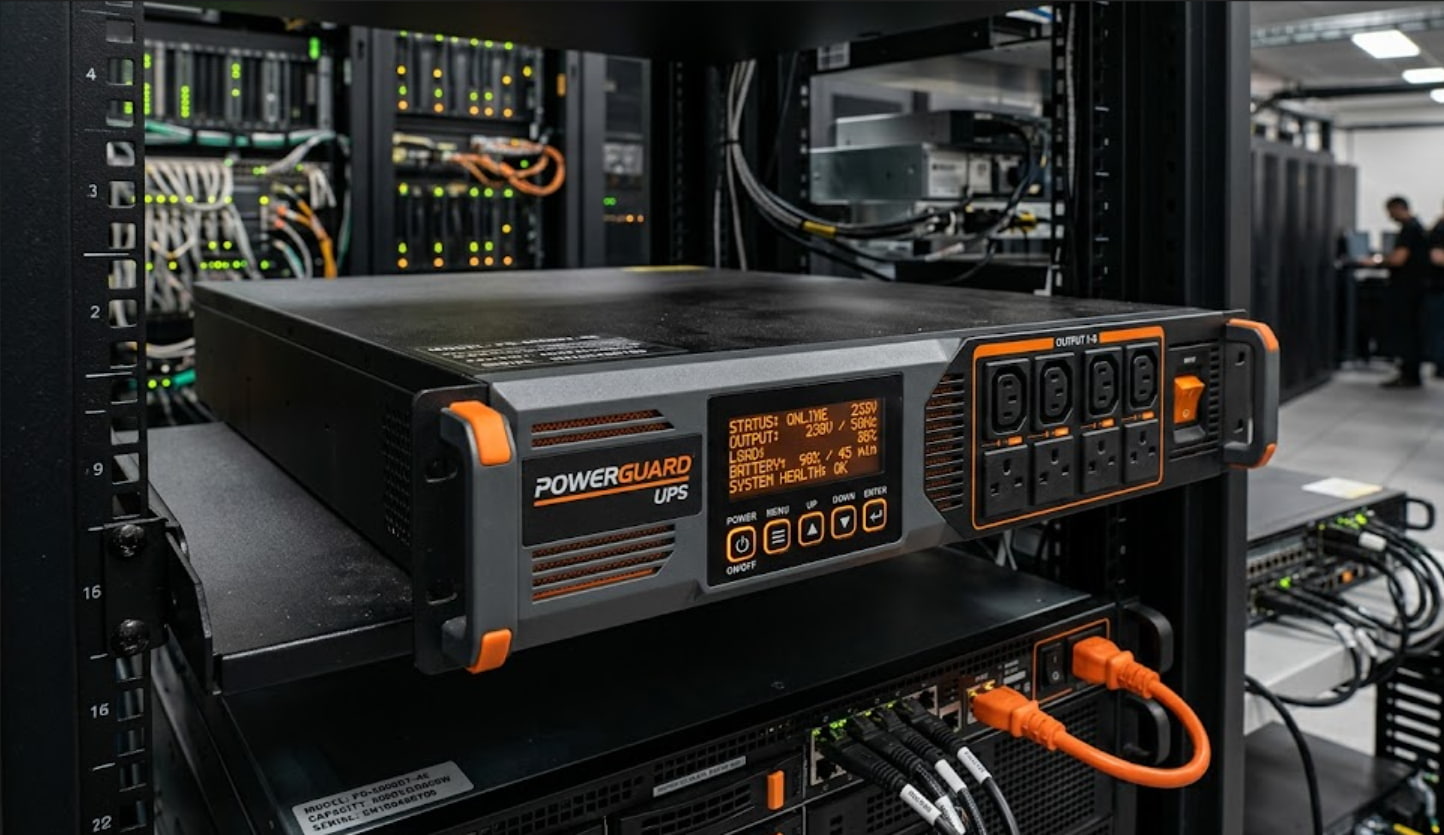
Not all UPS systems are created equal. For harsh industrial environments in Batam's industrial zones, the most recommended category is the Online Double Conversion type. This technology works by converting AC current from the grid into DC to charge the battery and power the inverter, then the inverter converts it back into highly stable AC for the critical load. This double conversion process provides total galvanic isolation between the 'dirty' input and 'clean' output.
In the context of the Electrical Engineering services we offer, we frequently emphasize the importance of these technical features in an industrial UPS system:
- Automatic Voltage Regulator (AVR): Stabilizes voltage fluctuations without switching to battery mode, extending battery cell life.
- Surge Suppression Components (TVSS): Internal components like Metal Oxide Varistors (MOVs) capable of absorbing thousands of Joules of surge energy.
- Static Bypass Switch: Ensures power continuity even if internal UPS components malfunction.
- Harmonic Filtration: Reduces total harmonic distortion (THD) often generated by non-linear loads like Variable Speed Drives (VSD).
Choosing UPS Based on IEC 62040-3 Classification
The international IEC 62040-3 standard classifies UPS systems based on the output's dependency on the input. For protecting highly sensitive industrial equipment in Riau Islands factories, the VFI (Voltage and Frequency Independent) classification is the gold standard. VFI UPS ensures that the frequency and voltage received by the load are completely independent of grid fluctuations from PLN Batam or backup generators, providing maximum protection against blackouts, sags, and unstable frequencies.
Integrating UPS into the Industrial Automation Ecosystem
Is your UPS system communicating with your control system? In the era of Industry 4.0, a UPS is no longer an isolated standalone device. In modern Industrial Automation solutions, the UPS is integrated via communication protocols like Modbus TCP/IP or SNMP into SCADA (Supervisory Control and Data Acquisition) systems.
Imagine a scenario where a massive power disturbance occurs at a chemical plant in Batam. The UPS sensors detect the voltage surge and immediately switch to battery power. Automatically, the UPS sends a signal to the PLC to perform a graceful shutdown procedure for critical machinery to prevent mechanical damage or chemical spills. Data from the UPS can also be pulled into our ERP Customization services to monitor energy consumption and predict battery replacement schedules based on actual usage cycles.
This integration advantage allows facility managers to:
- Monitor battery health and load in real-time remotely.
- Receive instant notifications via email or SMS during electrical anomalies.
- Analyze power disturbance history for more accurate energy audits.
Financial Impact: ROI from Power Protection Investment
Many business owners in Batam still view UPS systems as an upfront capital expenditure (CAPEX). However, a careful ROI (Return on Investment) calculation shows otherwise. Let's take an electronic assembly line generating Rp 500 million in products per day. If a voltage surge damages the main controller and causes 2 days of downtime for spare parts ordering and reconfiguration, the total loss reaches Rp 1 billion.
Investing in a high-quality industrial UPS system might only cost 10-20% of that potential loss. Beyond protection from fatal damage, a UPS also improves operational efficiency by reducing data corruption in Inventory Management solutions often caused by micro-blackouts. Stable power quality means longer equipment life, lower maintenance costs, and most importantly, peace of mind for the operational team.
Preventive Maintenance Strategy for UPS in Tropical Environments
Batam's humid and salt-rich climate (due to its proximity to the sea) demands special care for power electronic devices. Dust and moisture accumulation on internal UPS circuits can trigger arcing or short circuits. Therefore, a preventive maintenance strategy is crucial.
Practical steps include:
- Load Bank Testing: Ensuring the battery is actually capable of holding the load as per its promised capacity.
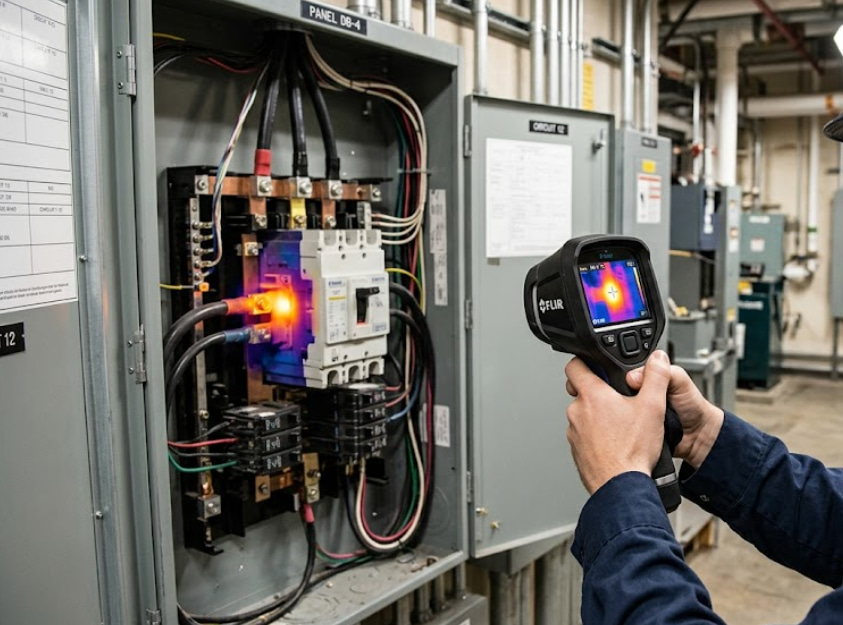
- Thermal Imaging: Using thermographic cameras to detect hot spots on cable terminals and internal components before failure occurs.
- Sensor Calibration: Ensuring voltage and current readings on the UPS display remain accurate compared to standard measuring tools.
- Humidity Control: Ensuring the environment around the UPS is within specified range to prevent corrosion on PCB boards.
At PT Wahari Nawa Manunggal, we provide comprehensive technical support ranging from capacity design, installation, to annual maintenance contracts to ensure your power protection system is always in top condition to face Batam's electrical challenges.
Frequently Asked Questions
A Surge Protector only functions to shunt high voltage spikes to a safer level but provides no backup power if the electricity fails. In contrast, a UPS System provides multi-layered protection: it not only shunts surges and filters noise, but also provides instantaneous battery power during blackouts or sags. For sensitive industrial equipment in Batam, a UPS is a far more complete and secure solution.
The average lifespan for UPS batteries (VRLA type) is 3 to 5 years, but in Batam, the temperature of the server room or panel room is highly influential. The ideal operating temperature is 25°C; every consistent 8-10°C increase can cut battery life by 50%. We recommend strict environmental temperature monitoring and battery capacity testing every 6-12 months to ensure readiness during power disturbances.
Modern Online UPS systems now have very high efficiency rates, often reaching 95-97% at full load. Many newer models also feature an 'Economy Mode' or 'ECO Mode' that can increase efficiency to 99% when grid power quality is stable, automatically switching back to double conversion mode in milliseconds if a disturbance is detected. This provides an optimal balance between maximum protection and operational energy cost savings for the factory.
Conclusion
Protecting industrial assets from power surge threats is not just about buying additional hardware; it is about building long-term operational resilience. Amidst the evolving industrial dynamics of Batam, reliance on precision technology demands uncompromising power stability. By implementing the right integrated UPS system, companies not only secure their investment in expensive machinery but also guarantee business continuity crucial for global customer satisfaction.
Don't let electrical spikes ruin your factory's productivity. Do you need a power quality audit or want to discuss the most suitable UPS specifications for your production line in Batam? Our team of experts is ready to help provide the right technical solutions. Take preventive action now and contact us for a free consultation with our team at PT Wahari Nawa Manunggal.