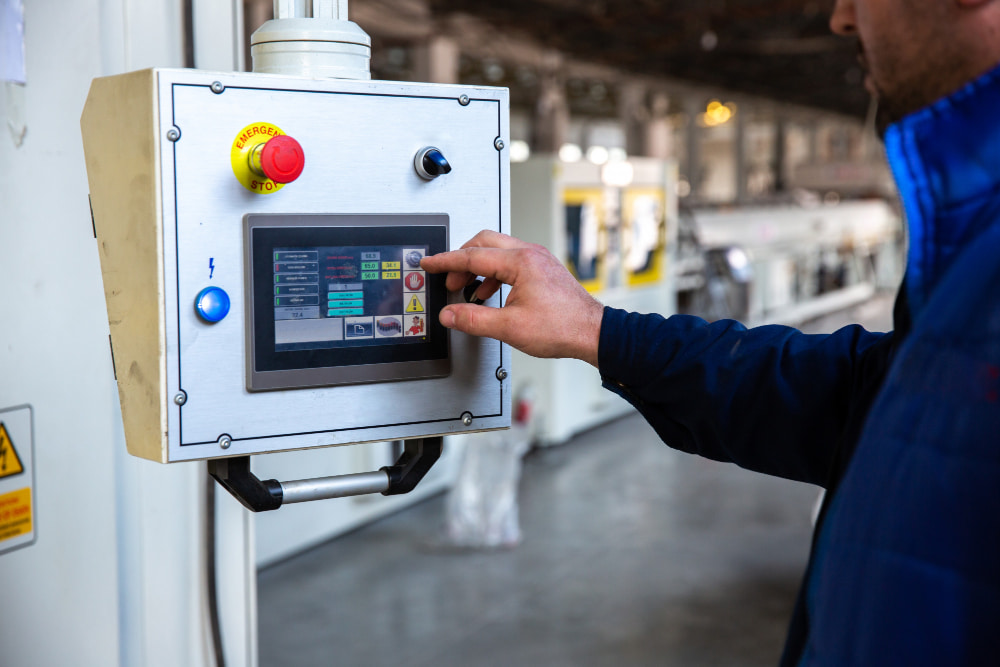

A single oversight in wiring or component selection within an industrial control panel can trigger millions of dollars in losses due to unplanned downtime in manufacturing facilities. In the industrial zones of Batam, where global benchmarks are the norm for multinational corporations, adhering to International Electrotechnical Commission (IEC) standards is no longer just an option—it is a technical necessity. Failure to comply with IEC 61439 or IEC 60204-1 standards doesn't just risk operator lives; it could also void your factory's safety certifications in the eyes of international auditors.
The Critical Role of IEC Standards in Industrial Control Panel Design
Why is the IEC standard so crucial for the Batam industrial ecosystem? As a strategic manufacturing hub in the Riau Islands, many factories in Batam produce components for European and American export markets. IEC standards ensure that low-voltage switchgear and controlgear assemblies possess a uniform level of safety and reliability worldwide. According to data from the International Association of Electrical Inspectors (IAEI), nearly 30% of electrical system failures in manufacturing are attributed to poor panel design and non-compliance with regulatory standards.
In the context of Batam industry, compliance with the IEC 61439 standard provides assurance that the control panel can withstand extreme thermal and mechanical stresses. This is particularly vital given the high humidity in the Riau Islands, which can accelerate corrosion on internal components if the ventilation systems and panel materials are not designed with precision. By following these regulations, companies not only secure physical assets but also bolster trust with global business partners who demand that every electrical infrastructure meets high-level technical criteria.
Strategic Steps for Designing IEC-Compliant Control Panels
Designing a control panel that meets IEC standards requires a systematic approach, starting from the planning phase to final testing. At PT Wahari Nawa Manunggal, we implement strict protocols in every project within our Electrical Engineering services to ensure seamless integration between functionality and safety.
1. Defining Specifications and Environmental Conditions
The first step is determining electrical characteristics such as operational voltage (Ue), nominal current (In), and frequency. However, a frequently overlooked factor is the environmental conditions where the panel will be located. For factories in Batam industrial areas near coastal zones, selecting an enclosure with the correct Ingress Protection (IP) rating is vital. The IEC 60529 standard governs the degree of protection against dust and water. For indoor industrial areas, IP54 is often the minimum standard, while for corrosive environments, 316L stainless steel is highly recommended.
2. Component Layout and Thermal Management
Component placement should never be arbitrary. IEC 61439 emphasizes the importance of clearance and creepage distances to prevent arcing. Furthermore, heat accumulation is the primary enemy of electronic components like PLCs and inverters. Following effective Industrial Automation solutions, a heat load calculation must be performed to determine whether the panel requires passive cooling, fan units, or even specialized panel ACs to maintain internal temperatures below 40°C.
3. Integrating Safety Systems and Circuit Protection
Protection against short-circuits and overloads is the heart of safe panel design. Designers must calculate the Short-Circuit Current Rating (SCCR) appropriate for the factory's transformer capacity. The use of Miniature Circuit Breakers (MCB), Molded Case Circuit Breakers (MCCB), and surge protection devices must be well-coordinated (protection discrimination) so that when a fault occurs, only the affected section is disconnected without shutting down the entire production line.
Wiring Integrity and Labeling According to IEC 60204-1
Wiring is about more than just connecting point A to point B. The IEC 60204-1 standard provides specific guidelines regarding wire color coding to facilitate easier identification and future maintenance. For example, black wires for AC/DC power circuits, blue wires for neutral control circuits, and green-yellow wires exclusively for earthing. In the dynamic Batam industrial zones, this color standardization significantly assists maintenance technicians in performing troubleshooting quickly and safely.
Beyond color, labeling every wire termination and component is mandatory. Labels must withstand environmental conditions and remain legible after years of use. This is where hardware and software integration often occurs. Utilizing Robotics & Software integration in the design process allows for the creation of accurate digital wiring diagrams, which are then placed on the panel door for rapid technical reference.
Statistics show that factories implementing neat wiring labeling and documentation can speed up electrical fault repair times by up to 40%. For operational managers in Batam, this time efficiency translates into significant savings in annual operating costs.
The Importance of Verification Testing and Technical Documentation
A good design isn't considered complete until it passes the verification phase. According to the IEC 61439 standard, there are two types of verification: design verification and routine verification. Design verification ensures that the panel prototype can handle extreme conditions, while routine verification is performed on every panel unit produced before it leaves the workshop.
Essential tests include:
- Dielectric Test: To ensure that cable and component insulation can withstand high voltage without leakage.
- Protective Circuit Continuity Test: Ensuring the earthing path works perfectly to dissipate leakage current to the ground.
- Visual Inspection: Checking for neatness, bolt tightness (torque), and component compliance with the Bill of Materials (BOM).
Complete technical documentation, including test reports, component certificates from a trusted Parts & General Supplier, and operational manuals, must be handed over to the client. This serves as authentic proof that the panel is fit for operation in heavy industrial environments.
Why a Local Partner in Batam is the Key to Success?
Choosing a panel design service provider located outside Batam often leads to logistical hurdles and slow maintenance responses. Partnering with a local company like PT Wahari Nawa Manunggal offers strategic advantages, including a deep understanding of specific regulations within the Batam work region and rapid access to factory sites for emergency services.
As a company experienced in industrial control panel installation in Batam, we offer more than just physical assembly; we provide comprehensive design consultation that merges electrical needs with digital system efficiency. Whether you are building a new production line or retrofitting an old system, ensuring your panels meet IEC standards is a long-term investment in your business stability.
IEC 61439 focuses on the design and verification of low-voltage switchgear and controlgear assemblies (the panel itself), including structural strength and electrical performance. Conversely, IEC 60204-1 focuses on the safety of electrical equipment connected to industrial machinery, covering operational aspects, emergency controls, and machine operator protection.
Determining the IP rating depends on the panel's specific location. For general dry production areas, IP42 or IP54 is usually sufficient. However, if the panel is placed in areas frequently exposed to water spray during cleaning or in open areas with a high risk of dust in Batam industrial zones, IP65 or higher is recommended to prevent internal contamination.
There is no obligation to use specific brands, but IEC standards require the use of components that have valid test certifications. It is highly recommended to obtain components from a trusted Parts & General Supplier to guarantee authenticity and compliance with the technical specifications stated in the initial design.
Conclusion
Designing industrial control panels that meet IEC standards is not just about the aesthetics of neat wiring; it is about building a solid foundation of safety for your factory operations. By understanding technical parameters ranging from thermal load and short-circuit protection to wire color codes, manufacturing companies in Batam can minimize the risk of workplace accidents and maximize productivity. Compliance with these international standards is the ticket for local industries to compete on the global stage competitively and sustainably.
Don't let your factory operations be hindered by unreliable electrical systems. Our expert team at PT Wahari Nawa Manunggal is ready to help you design, assemble, and install IEC-standard control panels tailored to your unique industrial needs in Batam. Get a free consultation with our team today to discuss your next automation or electrical engineering project.