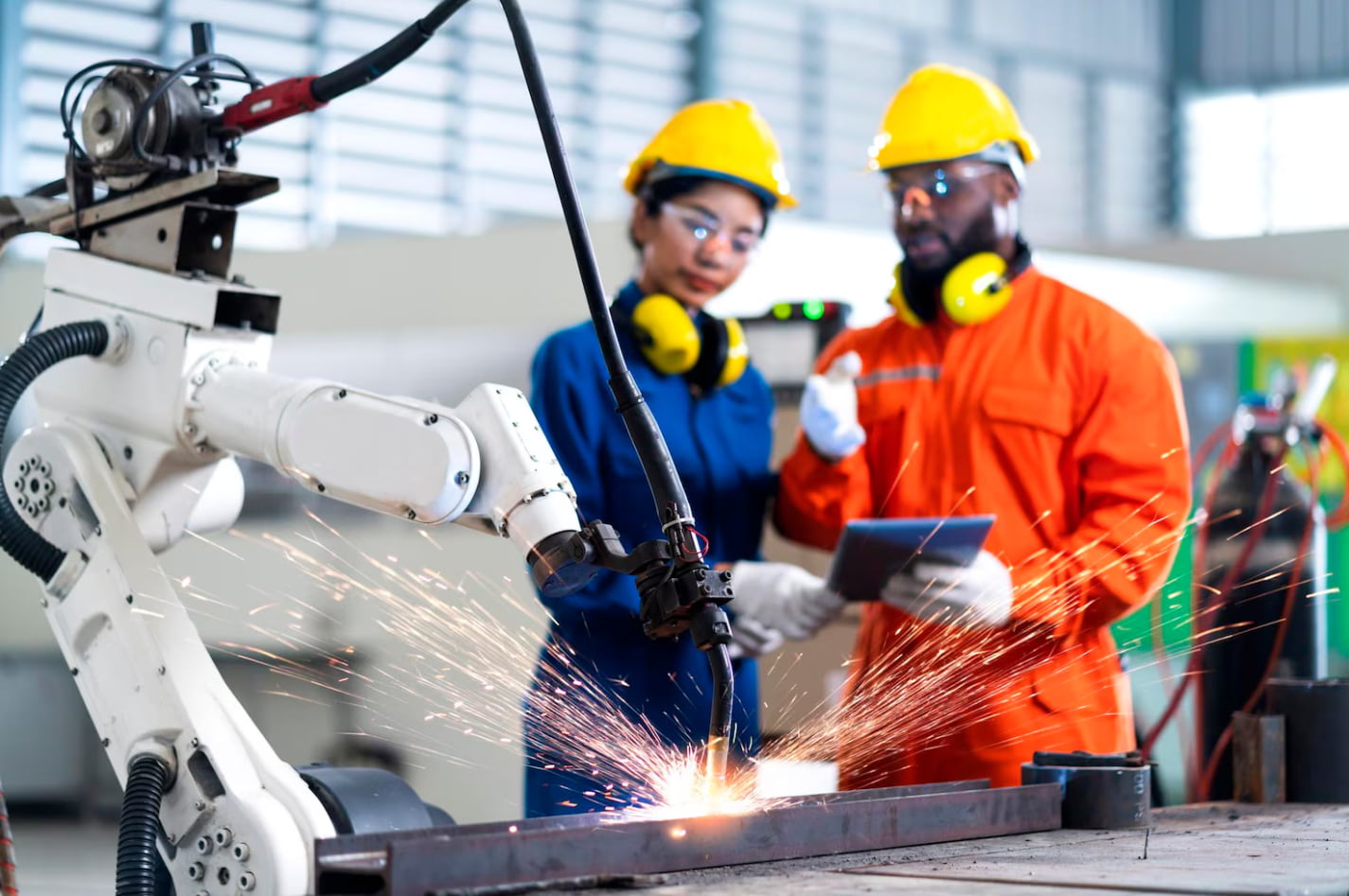

Approximately 40% of the total operating costs in metal fabrication facilities are often wasted on handling rework or repairing defective weld results. Amidst the fierce competition in Batam's industrial zones, this inefficiency figure is not just a technical statistic—it is a direct threat to a company's profitability. Imagine a shipyard in Tanjung Uncang or a precision component plant in Mukakuning having to dismantle a massive steel structure simply because of inconsistent weld penetration. This risk is no longer something that should be accepted as the "cost of doing business."
Automated welding systems have now emerged as the new standard to address these challenges. For production managers in Batam facing increasingly shorter lead times, relying 100% on manual skills is often a bottleneck. Operator fatigue, variations in technique between individuals, and the extreme environment of the humid Riau Islands all contribute to quality fluctuations. This is why the transition to automation is no longer a luxury, but a survival and growth strategy in a global market that demands international certification standards such as ISO 3834 or AWS (American Welding Society).
Why Weld Quality Consistency is a Major Challenge in Batam's Industrial Zones?
Industries in Batam have unique characteristics: high production volumes with very strict export quality standards. However, dependence on manual labor brings variables that are difficult to control. Based on data from the International Federation of Robotics (IFR), the use of robotics in welding processes can increase consistency by up to 98% compared to manual methods, which are often hampered by human ergonomic factors. In heavy fabrication environments, a human welder might start losing concentration after the 6th hour of work, causing arc instability or uneven travel speeds.
Welding defects such as porosity, undercut, or lack of fusion are the primary causes of rework. In Batam shipyards, a single failed weld point on a storage tank or offshore structure can mean losses of hundreds of millions of rupiah due to cleaning costs, re-welding, and delivery schedule delays. Furthermore, the cost of consumables like welding wire and shielding gas is often wasted in manual processes due to imprecise usage. Through the right Industrial Automation solutions, these variables can be locked into fixed digital parameters.
The Economic Impact of Rework on Company Profitability
Did you know that the cost to repair one inch of defective weld can be 3 to 5 times the cost of welding it correctly the first time? This includes machine downtime, overtime wages for specialists, and additional energy costs. In the context of Batam's industry serving international clients, rework also damages a company's reputation regarding OTIF (On Time In Full) performance. By adopting automation technology, companies can shift their focus from "fixing mistakes" to "ensuring precision from the start."
How Automated Welding Systems Eliminate Human Error
Modern automated welding technology works by integrating robotic hardware with advanced control software. Unlike humans, automated systems are capable of maintaining identical torch positions, angles, and travel speeds from start to finish, even for complex welding paths. This is where the role of Robotics & Software integration becomes crucial in creating synergy between mechanical movement and programming logic.
Several key technical features that ensure high quality include:
- Seam Tracking Sensors: Laser sensors that adjust the torch position in real-time if there is a slight deviation in the workpiece joint.
- Programmed Weld Parameters: Ampere, voltage, and wire speed settings locked within a PLC (Programmable Logic Controller).
- Repeatability: The ability to produce thousands of units with completely identical quality, essential for Batam's automotive and electronics industries.
- Data Logging: The ability to record every weld parameter for every component, facilitating traceability for future quality claims.
In Batam, we see many companies starting to switch to cobots (collaborative robots) or enclosed robotic cells. A real-world scenario is the production of server racks or industrial electrical panels. With manual welding, heat distortion often occurs due to uneven heat input. However, with a calibrated automated system, heat input can be minimized and distributed efficiently according to precise Electrical Engineering service standards.
SCADA and IoT Integration: Monitoring Quality in Real-Time
The true advantage of automation is not just in the physical movement of the robot, but in the data it generates. By connecting welding machines to a SCADA (Supervisory Control and Data Acquisition) system, factory managers in Batam's industrial areas can monitor the performance of every workstation from a control room. If an unusual voltage spike occurs or shielding gas flow decreases, the system provides a warning or even stops the process before a weld defect occurs.
Data from McKinsey shows that IoT integration in manufacturing can reduce maintenance costs by 10-40% through predictive maintenance. In welding, this means the system can detect when a contact tip on the torch is starting to wear out and needs replacement before it ruins the weld quality. This is what distinguishes a conventional welding shop from a modern smart factory in Batam. This alignment between mechanical and digital components is what we offer through comprehensive Industrial Automation solutions.
Building Traceability in the Global Supply Chain
International clients today often demand proof that every welded joint has met technical specifications. Without automation, you must rely on manual reports prone to data entry errors. With an automated system, every detail of the welding process is stored in a database. This provides high confidence for vendors in Batam when bidding for major projects from multinational corporations, as they can guarantee 100% quality transparency.
Strategic Steps for Automation Implementation for Business Owners in Batam
Transitioning to automation often feels intimidating due to the seemingly high initial costs. However, when calculated using a 24-month ROI (Return on Investment) model, the savings from reduced rework, gas/wire savings, and increased output usually far exceed the investment value. For companies in Batam, the key is to start with the areas that have the highest repetition and the greatest risk of rework.
Here are practical steps to take:
- Process Audit: Identify which parts of your production line most frequently require rework.
- Technical Feasibility Study: Consult on whether your product geometry is suitable for robotic welding.
- Human Resource Training: Don't dismiss old operators; upskill them to become robot operators capable of reprogramming the system.
- Choosing a Local Partner: Working with a solution provider that has a physical presence in Batam is vital for technical support and fast spare part availability through a reliable Parts & General Supplier.
But the question is not just about the technology—it's about who will support the system when issues arise? This is where PT Wahari Nawa Manunggal acts as your strategic partner. We don't just sell hardware; we build a sustainable automation ecosystem for industries in the Riau Islands.
Frequently Asked Questions
Absolutely. Today, modular automation solutions and cobots (collaborative robots) are more affordable and easier to program. For medium-scale workshops in Batam, automating high-volume products can offset the limited availability of certified welding experts while ensuring production remains competitive in both local and export markets.
The average ROI (Return on Investment) for robotic welding systems in manufacturing ranges from 18 to 36 months, depending on product complexity and the number of shifts. Key savings come from reducing rework costs by up to 80%, saving 20% on consumables, and increasing production throughput without increasing operator work hours.
As a Batam-based company, we have a strong logistics network to provide critical components like contact tips, liners, nozzles, and PLC electronic modules quickly. We understand that every minute of downtime in Batam's industrial zones is valuable, so local support is our top priority to minimize client operational disruptions.
Conclusion
Adopting an automated welding system is not just about following a technology trend; it is a strategic decision to eliminate inefficiencies that have been eroding your profit margins. In Batam, where international industry standards are the benchmark of success, weld quality consistency is a non-negotiable asset. By drastically reducing rework rates, your factory becomes not only more productive but also more globally competitive.
Ready to transform your production line into a center of technological excellence? At PT Wahari Nawa Manunggal, we understand the specific challenges of manufacturing in Batam. Let's discuss how our automated welding solutions and control panel integration can eliminate quality issues in your factory. Click here to get a free consultation with our team and find your path to limitless efficiency.