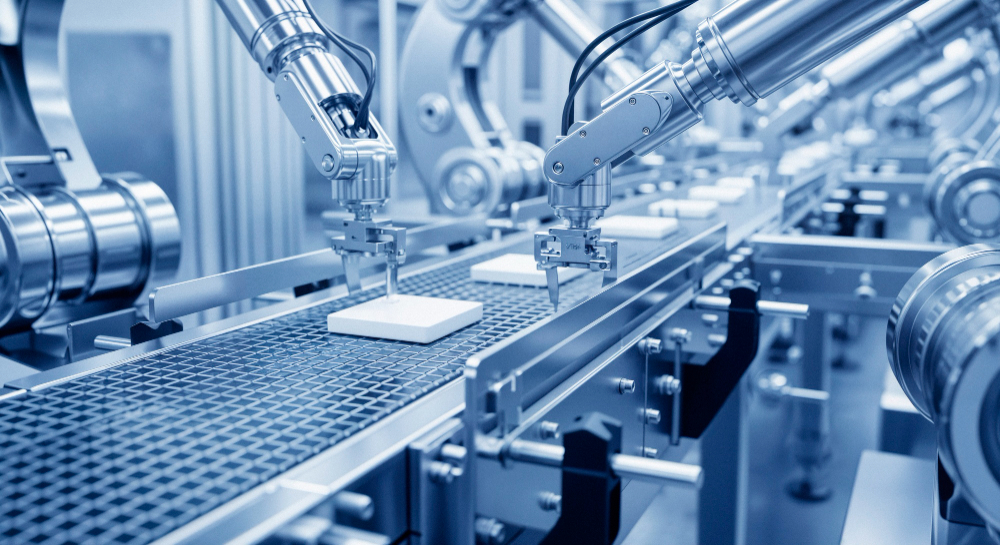

Batam is no longer just a low-cost assembly hub; in 2026, this island city has transformed into Indonesia's most advanced manufacturing technology center. Recent data from the Batam Indonesia Free Zone Authority (BP Batam) indicates a significant surge in Foreign Direct Investment (FDI), with over 65% of new capital allocated towards machinery modernization and digital control systems. Why is this phenomenon occurring so much faster in Batam than in industrial zones in Java or Sumatra? The answer lies in a unique convergence of strategic geography, consistent minimum wage pressures, and the urgent need to connect with global supply chains that demand high-level precision.
As part of the "Indonesia Emas 2045" vision, business owners in the Batamindo, Muka Kuning, and Kabil Industrial Estates are realizing that reliance on manual labor is no longer a sustainable strategy. Amidst fierce competition from Vietnam and Thailand, manufacturing automation in Batam has become the key to maintaining profit margins. Companies are now looking for more than just machines; they are seeking comprehensive systems integration that connects the production floor directly to the boardroom via real-time data.
Key Drivers of Industrial Automation Acceleration in Batam 2026
The rise in production efficiency in Batam in 2026 did not happen by chance. According to industrial market research reports, the technology adoption growth in Batam is predicted to reach 18% Year-on-Year (YoY), surpassing the national average of only 11-12%. There are three critical factors driving this acceleration. First is the proximity to Singapore. As a world technology hub, Singapore provides instant access to the latest innovations in Robotics & Software integration, which often lands in Batam before spreading to Jakarta or Surabaya.
Second, the challenge of operational costs. With the minimum wage continuously adjusting to industrial city living standards, manufacturing companies are turning to technology to reduce long-term costs. Utilizing the right Industrial Automation solution can reduce operational costs by up to 30% within the first two years of implementation. This is where smart control systems become vital. A real scenario we often encounter in the field is an electronics factory in Muka Kuning switching from manual labeling to an integrated robotic system, which not only speeds up the process but also eliminates costly human errors.
Third, government regulations and Green Industry incentives. The government has begun tightening rules on emissions and energy efficiency. In Batam, this is responded to with Solar PV installations and updating Electrical Engineering services to ensure more efficient power consumption. Intelligent control panels are now equipped with IoT sensors to monitor electrical loads in real-time—a new standard for modern manufacturing industries in the Riau Islands region.
SCADA and PLC Integration: The Heart of Smart Factories in Riau Islands
To understand why automation in Batam is so massive, we must look under the hood. SCADA (Supervisory Control and Data Acquisition) and PLC (Programmable Logic Controller) technology are now mandatory standards, no longer optional. In various Batam industrial zones, modern SCADA systems are used to monitor entire production processes from a single central screen. This isn't just about turning machines on or off; it's about granular data collection for predictive analysis.
PLC implementation with IEC 61131-3 standards ensures that every machine component can communicate seamlessly through protocols like Modbus or OPC-UA. In practice, high-quality automation solution for factories in Batam will ensure that these systems are protected from electromagnetic interference and power fluctuations, which are frequent challenges in coastal areas. PT Wahari Nawa Manunggal, for instance, often handles control panel needs that must withstand the high humidity typical of Batam's tropical climate, ensuring a much longer lifespan for electronic components.
The Gap Between Software and Hardware: The Role of ERP in Manufacturing
A sophisticated machine will not deliver maximum results if the data it produces is isolated. This is what distinguishes the 2026 trend in Batam: horizontal and vertical integration. Operational managers in Batam are starting to abandon manual recording systems and moving to our ERP Customization services based on Odoo. Why Odoo? Because of its flexibility in connecting inventory modules with production machines in the field.
Imagine a scenario where a machine in a Kabil plastic factory detects that raw material stocks are down to 10%. Automatically, the PLC system sends a signal to the ERP, which then immediately creates a Purchase Order (PO) to the preferred Parts & General Supplier without manual intervention. This level of automation is what makes factories in Batam globally competitive. This speed of response is crucial, considering Batam's logistics patterns are highly dependent on international shipping schedules at Batu Ampar and Kabil ports.
Optimizing Supply Chains with Inventory Management Solutions
For large manufacturers, managing thousands of component SKUs is a logistical nightmare. In 2026, the use of wireless barcode scanners and RFID connected to digital Inventory Management solutions has become the norm. This eliminates classic problems like dead stock accumulation or material shortages during peak production. At PT Wahari Nawa Manunggal, we see a 40% increase in demand for inventory software customization as companies want full control over their assets, whether mechanical assets or raw materials.
Technical Challenges and Automation Implementation Solutions in Batam
The transition toward full automation is not without obstacles. One of the biggest challenges for industrial players in Batam is the availability of specific spare parts and fast local technical support. Often, companies are stuck with imported machines whose vendors do not have representative offices in the Riau Islands. This leads to days of downtime just waiting for technicians from abroad or Jakarta.
To overcome this, companies must partner with local solution providers who have a deep understanding of international industrial standards yet maintain fast local response times. 24/7 technical support and the availability of PLC, inverter, and sensor components in Batam differentiate smooth production from massive losses due to machine failure. Additionally, Industrial Cybersecurity is becoming a focus, where factory control networks must be protected from external threats that could paralyze entire production lines.
Several technical points to consider when designing automation include:
- Protocol Compatibility: Ensuring all sensors and actuators support standard communication protocols (Profinet, Ethernet/IP).
- System Redundancy: Installing AMF (Automatic Mains Failure) and backup control panels to prevent sudden shutdowns.
- Scalability: Designing software architecture that allows for the addition of new machines in the future without revamping the entire system.
Frequently Asked Questions
Based on our experience with various industries in Batam, the average ROI for medium-level automation investments ranges from 18 to 24 months. Savings factors include reduced overtime labor costs, a 15-20% decrease in product defect rates, and up to 25% energy consumption efficiency through smart power management systems.
Yes, they can. Through a retrofitting process, we can install modern PLCs and new sensors on old machines to provide digital data monitoring capabilities. This is a very effective solution for manufacturers in Batam who want to modernize without having to purchase expensive new machinery.
Batam's coastal environment has high salinity and humidity that can accelerate corrosion in electronic components. We recommend using panels with an IP65 rating or higher, and utilizing components with conformal coating to ensure long-term operational stability.
Conclusion
The leap in manufacturing technology in Batam in 2026 proves that industrial automation in Batam is no longer just a trend, but the new foundation for business sustainability. By integrating precise mechanical control through PLC/SCADA and smart data management through ERP systems, Batam's factories now stand equal to international manufacturing giants. The journey toward Industry 4.0 is indeed challenging, but with the support of the right local technology partner, every obstacle can be turned into a real opportunity for efficiency for your company.
Is your factory ready to face the industrial competition of 2026? Do not let your operations fall behind technological advances. At PT Wahari Nawa Manunggal, we understand the unique dynamics of Batam's industrial zones and are ready to help you design an efficient, reliable, and energy-saving automation system. Start your transformation journey today with a free consultation with our team for appropriate engineering and software solutions.