
Paying kVARh penalties on monthly electricity bills is often viewed as an unavoidable operational cost by many factory managers in Batam. However, did you know that this figure actually reflects an electrical system inefficiency that can be entirely eliminated? In the competitive industrial zones of Batam, ranging from Batamindo to the Kabil Integrated Industrial Estate, energy efficiency is no longer just an option—it is a strategic necessity to maintain healthy profit margins. Most heavy industrial machinery utilizing large induction motors tends to generate high inductive loads which, if left unmanaged, will damage your company's energy profile in the eyes of power providers like PLN Batam.
Understanding Power Factor Correction Mechanisms in Heavy Industry
Before we discuss potential savings, we must understand what Power Factor (PF) actually is. Technically, PF is the ratio of real power (kW) used to perform productive work to the apparent power (kVA) supplied by the grid. Imagine a glass of soda; the liquid is the real power, while the foam on top is reactive power (kVAR). You pay for the entire glass (kVA), even though only the liquid (kW) provides the refreshment. Power factor correction aims to minimize that 'foam' so your system works more efficiently.
In Batam's heavy industrial environment, the use of electric motors, transformers, and discharge lighting generates electromagnetic fields that require reactive power. Issues arise when the demand for this reactive power is too high, causing the power factor to drop below the minimum standards set by PLN (usually 0.85). Based on industrial data, systems with a low power factor below 0.7 can cause current increases of up to 40% in cables and distribution equipment, leading to overheating and reduced component lifespan. This is why comprehensive Electrical Engineering services are crucial for conducting audits and proper correction system installations.
According to reports from the International Energy Agency (IEA), optimizing industrial motor systems through power factor correction can contribute to energy savings of 20-30% at the system level. For manufacturing industries in the Riau Islands, this figure can translate into savings of hundreds of millions of rupiah per year, depending on the scale of the factory's operations.
Key Components in a Power Factor Correction (PFC) System
To achieve maximum results, a PFC system is more than just a stack of capacitors. A reliable system, especially for handling fluctuating loads in large factories, requires high-quality components compliant with IEC 61921 standards. Here are the components we typically integrate:
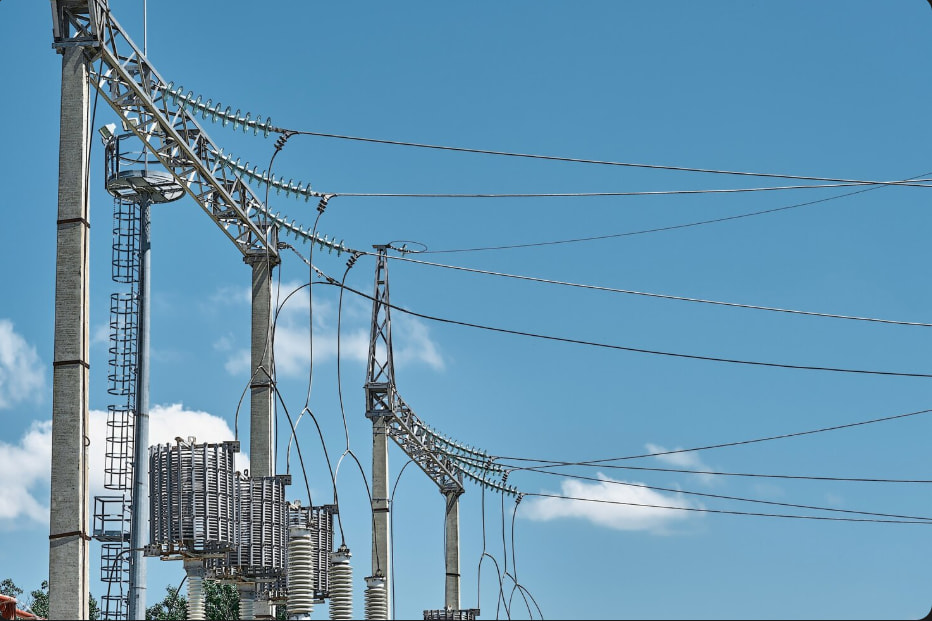
- Capacitor Banks: The primary source of reactive power that compensates for inductive loads.
- Automatic Power Factor Controller (APFC): The brain of the system that monitors loads in real-time and switches capacitor steps on/off automatically.
- Detuned Reactors: Vital components in environments with high harmonic distortion to prevent capacitor resonance.
- Switchgear & Protection: Circuit breakers and fuses that protect the system from sudden current surges.
Eliminating kVARh Penalties: Direct Financial Impact for Companies
The most frequent question asked by CFOs in Batam is: "How fast is the ROI on this investment?" The answer lies in the kVARh cost component of your electricity bill. PLN Batam charges additional fees if your average monthly power factor falls below 0.85. These penalties are progressive; the worse your power factor, the higher the cost burden that adds zero value to your production.
Let's look at a real-world scenario. A metal processing plant in Tanjung Uncang has a monthly electricity bill of approximately IDR 500 million, with kVARh penalties reaching IDR 45 million due to a power factor of just 0.72. By implementing the right power factor correction solution, that IDR 45 million penalty can be slashed to zero instantly once the system is active. In this scenario, if the PFC panel installation cost is IDR 180 million, the ROI is achieved in just 4 months. After that period, the IDR 45 million monthly saving goes straight to the company's net profit.
Beyond penalty elimination, energy efficiency also includes the reduction of technical losses (I²R losses) in the factory's internal distribution cables. With a power factor approaching 1.0 (unity), the current flowing through cables decreases, meaning lower operating temperatures. This significantly reduces the risk of fire due to cable insulation failure—a real threat to aging industrial facilities in Batam industrial zones that rarely undergo routine electrical maintenance.
Increasing Distribution System Capacity Without Transformer Upgrades
One of the constraints on heavy industrial growth in Batam is limited transformer capacity or power availability from the utility provider. When a factory wants to add a new production line, they are often hindered by the fact that the existing transformer has reached its peak load. Before you decide to spend billions of rupiah on a transformer upgrade or requesting more power from PLN, consider power factor correction as a much more economical alternative.
By improving the power factor from 0.7 to 0.95, you effectively 'release' kVA capacity on the transformer that was previously wasted on handling reactive power. Mathematically, this improvement can provide up to 20-25% additional capacity. This means you can add new machinery or increase production volume without replacing major electrical infrastructure. This is a form of smart Industrial Automation solution, where optimizing existing hardware becomes a priority before expensive physical expansion.
At PT Wahari Nawa Manunggal, we often find cases where factories in Batamindo think they need a power increase, when the real problem is load inefficiency. Through the integration of modern technology, we help companies perform this capacity optimization so operations remain smooth with minimal capital expenditure (CAPEX).
SCADA Integration and Real-Time Energy Monitoring
In the Industry 4.0 era, letting a PFC panel work in isolation without supervision is a mistake. We highly recommend using Robotics & Software integration to monitor energy performance. By connecting the APFC to a SCADA (Supervisory Control and Data Acquisition) system or an IoT-based dashboard, operational managers can view load profiles in real-time via smartphone or office computer.
- Early Warning System: Receive notifications if a capacitor step is damaged or blown.
- Historical Data Analysis: Compare energy usage profiles between shifts to find further inefficiencies.
- Predictive Maintenance: Schedule maintenance before system failures cause penalties to reappear.
The Challenge of Harmonics in Batam Industry and Its Solution
Many companies in Batam attempt to install capacitor banks themselves but end up with system failures or even capacitors exploding within a short time. Why does this happen? The primary cause is harmonic pollution. In modern industry, which uses many Variable Frequency Drives (VFDs), inverter welding machines, and other sensitive electronic equipment, the generated harmonic currents can interact with capacitors and cause resonance.
This resonance multiplies the current entering the capacitor, causing it to overheat and eventually fail. As an experienced Parts & General Supplier, we always emphasize the use of proper detuned reactors to protect capacitors from these harmful harmonic effects. Installing without a deep technical study of your factory's harmonic profile is a high-risk investment. We use advanced power quality analyzers to map out the electrical conditions at your site before providing panel design recommendations.
Frequently Asked Questions
With high-quality components and routine maintenance, a PFC system or Capacitor Bank can last between 8 to 12 years. However, capacitors have a technical lifespan influenced by ambient temperature and power quality (harmonics). In Batam's hot and humid industrial environment, routine checks every 6 months are highly recommended to ensure performance remains optimal and there is no degradation in microfarad (µF) capacity.
Technically, power factor correction primarily reduces reactive power (kVAR) consumption, not the real power (kW) used for actual machine work. However, it indirectly reduces kW consumption slightly by minimizing heat losses in cables and transformers. The main financial benefit remains the elimination of kVARh penalties and the reduction of kVA demand from the utility provider.
The need for PFC depends on the electricity tariff category and the type of equipment used. Generally, small industries (I2/I3 categories) with many motor loads or large-scale AC units will benefit greatly. If your electricity bill shows significant kVARh charges every month, investing in a power factor correction system will be highly profitable regardless of your business scale.
Conclusion
Managing electricity costs in the heavy industry sector is not just about turning off lights when not in use. A much more impactful strategy is through planned and precise power factor correction. By eliminating kVARh penalties, lowering operational currents, and extending the life of distribution equipment, you not only save costs but also increase the operational reliability of your factory in Batam. Investing in a PFC system is one of the energy efficiency steps with the fastest ROI that facility management can take today.
Is your industrial electricity bill in Batam constantly bloating due to kVARh penalties? Don't let your profits be wasted on energy inefficiencies that can be solved. The expert team at PT Wahari Nawa Manunggal is ready to help you conduct a comprehensive energy audit and design the most efficient power factor correction solution for your facility. Contact us today for a free consultation with our team and discover the potential for real savings for your business.