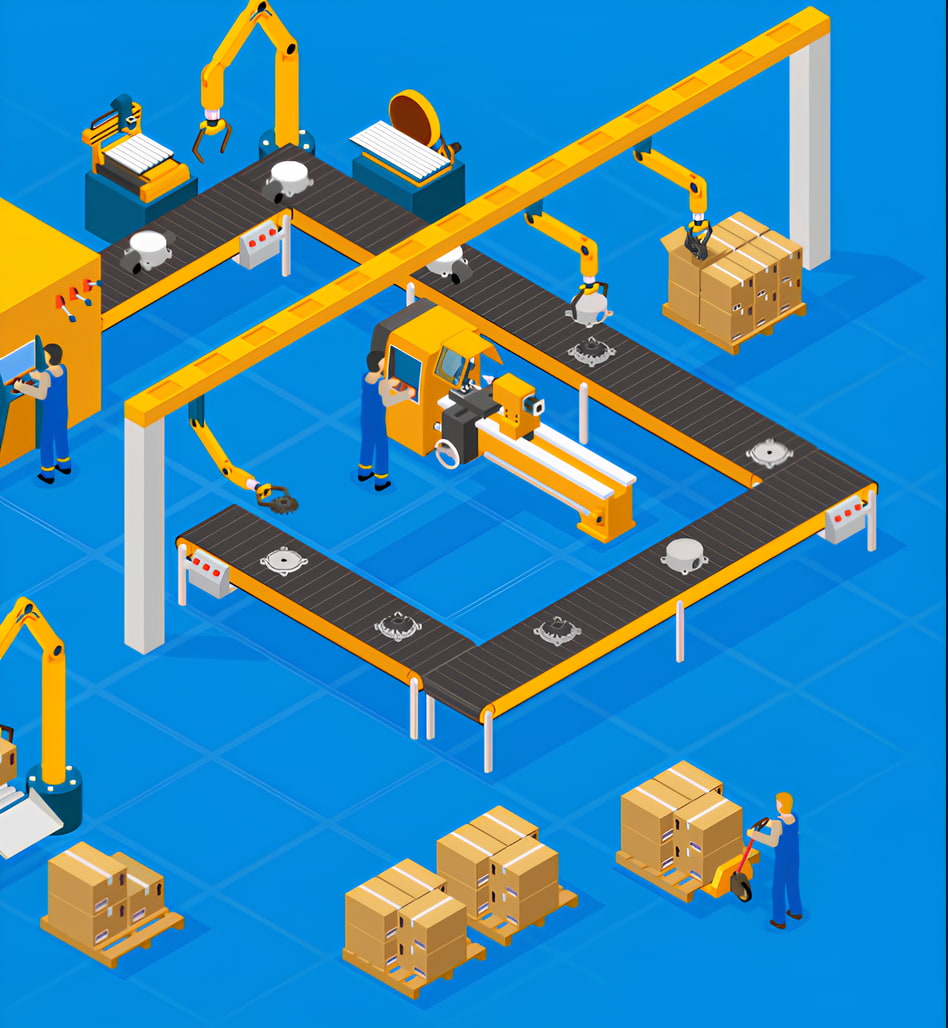

Efficiency is no longer just an option for industrial players in Batam's industrial zones; it is the only currency that guarantees business survival amidst global economic fluctuations. In many traditional manufacturing lines, manual material handling is often the most inefficient drain on the budget. In fact, rising minimum wages in the Riau Islands region, combined with high labor turnover in low-level operator positions, are forcing factory directors and operational managers to seek more stable alternatives. Replacing human labor for repetitive tasks with intelligent material transport systems is not just about modernization—it is a crucial survival strategy.
Eliminating Non-Value-Added Activities
In Lean Manufacturing methodology, activities that do not add value to the product but incur costs are called waste. Moving goods from Point A to Point B manually is a classic example of this waste. Data from various industrial efficiency studies show that manual operators spend up to 30-40% of their working time just walking, carrying loads, or waiting for materials to arrive. By implementing Industrial Automation solutions based on conveyors, this wait time is totally eliminated. Conveyors work continuously without breaks, without fatigue, and at mathematically predictable speeds.
In Batam's industrial areas, where the electronics and precision assembly sectors dominate, the accuracy of material movement is critical to production cycle times. Imagine a factory in Batamindo employing 20 people just to transport components between workstations. If the average minimum wage and benefits reach a certain figure per month, the annual cost for these non-productive activities can reach billions of Rupiah. The use of automated conveyor systems allows those 20 people to be relocated to quality control or assembly departments that require higher skills, thereby increasing company output without adding to the headcount.
Utilizing VFD and PLC for Speed Optimization
Modern conveyor technology is more than just a rotating belt. The use of Variable Frequency Drives (VFD) and Programmable Logic Controllers (PLC) allows the system to adjust speed based on the real workload on the production line. Through precise Electrical Engineering services, conveyor systems can be programmed to slow down during downstream bottlenecks and speed up when demand increases. This prevents material pile-ups that often require additional manual intervention to reorganize.
Reducing Hidden Costs from Injuries and Employee Turnover
Many business owners in Batam often only calculate labor costs from monthly salaries, but forget to account for hidden costs such as occupational accident insurance (BPJS Ketenagakerjaan), recruitment costs, and retraining costs. Manual material handling is the leading cause of musculoskeletal injuries in the workplace. When an operator suffers an injury from repetitive heavy lifting, the company not only loses labor but also faces compensation claims and a decline in team morale. Conveyor automation drastically eliminates these ergonomic risks.
Furthermore, industries in Batam face a unique challenge in the form of intense talent competition between factories. Heavy manual work tends to have high resignation rates. The cost of searching, interviewing, and training new operators in Batam's industrial zones is not cheap. By adopting Robotics & Software integration, companies create a higher-tech and less physically taxing work environment, which in turn improves employee retention rates. Employees feel more like skilled machine operators rather than just manual movers.
Compliance with International Safety Standards (IEC & NEMA)
Conveyor systems designed by professional experts always refer to safety standards such as IEC 61511 or NEMA regulations. By including safety features such as emergency stops, human presence sensors, and automatic safety fencing, the risk of workplace accidents can be reduced to near zero percent. Investment in this security directly reduces company liability in the long run, which is a form of hidden labor cost savings that significantly impacts the balance sheet.
Increasing Throughput and Overall Equipment Effectiveness (OEE)
Human speed is variable; we have productive hours and hours where concentration dips. In contrast, automated systems offer consistency. In Batam's manufacturing industry, consistency is the key to achieving daily production targets. Automated conveyors ensure a uniform flow of materials, which directly improves the Overall Equipment Effectiveness (OEE) of primary production machines. When CNC machines or injection molding machines don't have to wait for manual material delivery, machine utility is maximized.
Data from McKinsey indicates that automation in internal supply chain management can increase productivity by 20-35%. For manufacturing companies in the Riau Islands serving export markets, an increase in throughput of this magnitude means the ability to fulfill orders faster without needing expensive night shift overtime. These overtime savings alone are often enough to finance the initial investment of a conveyor system in less than two years.
Integration with Warehouse Management Systems
Labor efficiency doesn't stop at the production floor. When a conveyor system is integrated with Inventory Management solutions, recording of incoming and outgoing goods occurs automatically through RFID sensors or barcode scanners installed on the conveyor path. This eliminates the need for warehouse admin staff who must perform manual scanning one by one, thereby minimizing human error in stock recording.
ROI Analysis: Why Now is the Right Time for Batam Industry
The most frequently asked question by procurement managers in Batam is: "When will this investment pay off?" Given the increasingly competitive costs of sensor technology and electric motors, the Return on Investment (ROI) for simple conveyor systems can now be achieved within 12 to 18 months. Amidst the Industry 4.0 transformation trend, delaying automation means allowing your competitors to produce goods at lower overhead costs. Batam's strategic location as an international logistics hub demands every factory to have efficiency standards on par with manufacturing in Singapore or China.
PT Wahari Nawa Manunggal understands these local dynamics. As a trusted Industrial Automation solution partner, we don't just sell hardware; we design ecosystems that reduce dependence on expensive and unstable manual labor. With a consultative approach, we help you identify the points in your production line where automation will provide the greatest financial impact.
Frequently Asked Questions
Generally, for manufacturing in Batam's industrial zones, ROI is typically achieved within 12 to 24 months. This is calculated from direct wage savings, reduced overtime costs, decreased workplace injury rates, and increased production throughput that allows for higher sales volume without adding staff.
No, if the system is designed with industry-standard components like Schneider, Siemens, or Omron PLCs that are commonly available in Indonesia. PT Wahari Nawa Manunggal provides training for your internal technical team and offers periodic maintenance support to ensure minimal downtime.
It is highly suitable. We offer modular solutions that can start on a small scale according to SME budgets. Automation actually helps SMEs in Batam compete with large companies by suppressing operational costs early on and enabling production scalability in the future without having to recruit many new employees.
Conclusion
Conveyor automation is not just about replacing human hands with machines; it's about revolutionizing how a factory operates to achieve maximum financial efficiency. Amidst the fierce industrial competition in Batam and the Riau Islands, the ability to cut non-productive labor costs will determine who leads the market. By reducing human error, enhancing workplace safety, and maximizing throughput, automated conveyor systems are the most logical investment for growth-oriented companies.
Ready to slash your manufacturing operational costs and boost production line efficiency in Batam? Don't let manual waste hinder your business growth. Our technical expert team at PT Wahari Nawa Manunggal is ready to help design an automation system specific to your industrial needs. Contact us today for a free consultation with our team and receive a preliminary analysis of potential cost savings in your factory.